
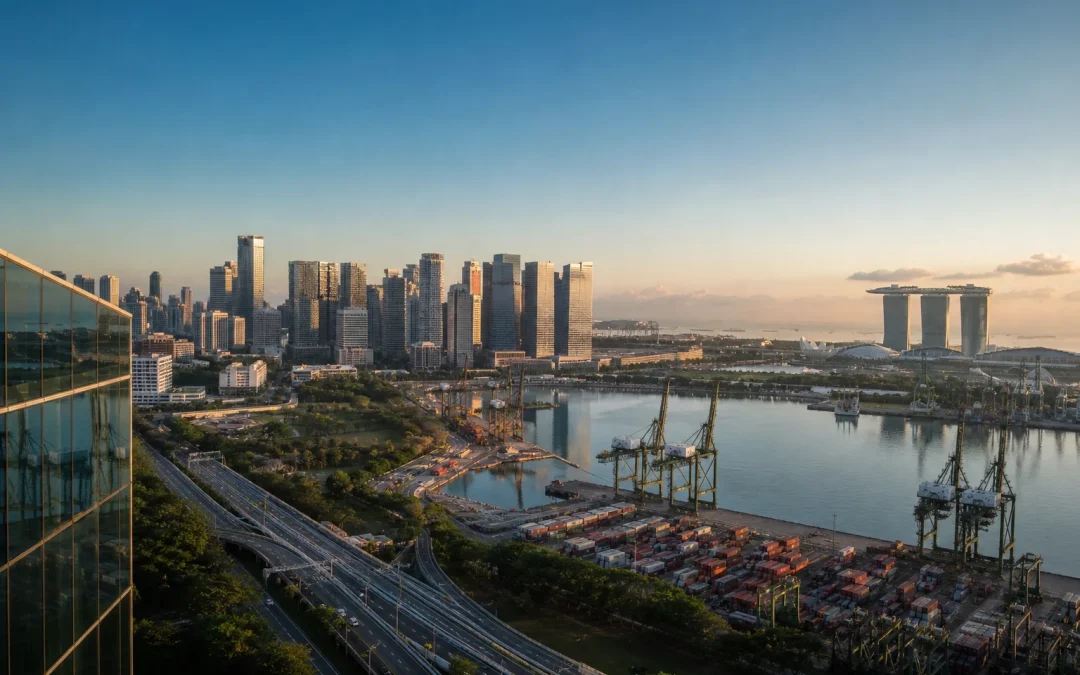
MOE school or international: a parent decision framework comparing MOE and international-school admissions, timing, curriculum, location and Student’s Pass.
MOE school or international: The choice between an MOE school and an international school depends on the child, the arrival date, available places, curriculum, cost and immigration status. Families may need to apply through both routes until they receive an offer and can choose a suitable home.
MOE mainstream schools may suit families comfortable with centralised admission, the Singapore curriculum, vacancy-based placement and a January school year. International schools may offer better curriculum continuity, calendar fit, language support or direct school choice. Until the offer, immigration route and location line up, it is often wise to keep both paths open.
MOE mainstream schools may suit families comfortable with centralised admission, the Singapore curriculum, vacancy-based placement and a January school year. International schools may offer better curriculum continuity, calendar fit, language support or direct school choice. Until the offer, immigration route and location line up, it is often wise to keep both paths open.
The decision should not begin with a school ranking. Start with the child’s age, present curriculum, language, learning needs, arrival date, immigration status and the family’s realistic commute and budget. Then compare admission certainty and educational fit.
Main differences
| Factor | MOE mainstream route | International-school route |
|---|---|---|
| Admission path | Central exercises or stated international-student routes, with placement subject to performance and vacancies | Direct application to each school, with its own assessment, waitlist and offer terms |
| Curriculum | Singapore curriculum, English instruction and applicable Mother Tongue expectations | Varies by school, including international, national and blended programmes |
| Calendar | Generally aligned to the Singapore school year | May follow January, August or another academic cycle |
| Location | Placement is not the same as choosing any preferred school | Families apply to named schools but must test transport and availability |
| Cost | Check nationality-based MOE fees and other charges | Compare application, enrolment, tuition, capital, transport and activity fees |
| Immigration | Student’s Pass may be required depending on the child’s existing pass | The same pass question applies, with school and EduTrust conditions where relevant |
Check the MOE admissions route
The Admissions Exercise for International Students is for international students seeking Primary 2 to 5 or Secondary 1 to 3 admission in the following academic year. MOE states that successful applicants start school in January and that admission is not guaranteed. Placement depends on test performance, available vacancies and, where possible, the declared residential area.
For the 2026 AEIS leading to 2027 admission, MOE indicated an application period beginning in July 2026 and tests in September or October 2026, subject to the final live schedule. That timing can conflict with a family arriving after the application window or seeking immediate mid-year entry. Check the current AEIS and supplementary exercise pages by level rather than relying on last year’s calendar.
Primary 1 uses a separate international-student process. MOE’s P1 guidance places international students in Phase 3 after citizens and permanent residents have been allocated places. Parents should follow the current registration steps, indicate interest in the stated period and understand that a place at a preferred school is not assured.
Compare the curriculum and the child’s age
MOE’s study guidance for international students explains that mainstream classroom instruction is in English and that centralised tests are conducted in English. Applicants should be familiar with the English and Mathematics syllabus of the level preceding the one sought.
MOE also publishes age guidance and notes that new students are generally not admitted at certain examination-sensitive levels. International students in mainstream primary schools complete the Primary School Leaving Examination to proceed to secondary school. Mother Tongue requirements and any exemption request should be examined early because an exemption is considered through the school and is not automatic.
For an international school, ask for the exact curriculum sequence, year-placement method, language support, special educational needs provision, assessment approach, subject availability and graduation pathway. A school brand does not ensure continuity if the child is switching from a different syllabus or entering near an examination stage.
Check the chance and timing of admission
Create three columns: confirmed, conditional and uncertain. A submitted application is uncertain. A test invitation is uncertain. A waitlist is uncertain. A written offer may still be conditional on deposit, records, assessment, immigration status or learning-support review.
For each international school, record application fee, assessment date, decision date, waitlist position if disclosed, deposit, refund conditions, tuition schedule and required start date. Avoid paying several large non-refundable amounts without ranking the options and understanding withdrawal terms.
Run a backup plan for at least one academic term. It might include another suitable school, delayed relocation, a bridging programme that is lawful under the child’s status, or a parent and child arriving on a different schedule. Do not assume that a short-term visit status authorises a full-time course.
Check whether a Student’s Pass is needed
ICA’s Student’s Pass guidance for government, government-aided and independent schools states that a foreign child offered full-time study generally needs a Student’s Pass unless the child holds a valid Dependant’s Pass, Long-Term Visit Pass or Immigration Exemption Order. The application should be submitted at least two months and not more than three months before the course begins.
ICA’s foreign-system-school guidance applies a similar timing window and states that a foreign-system school must meet the applicable EduTrust requirement before it can offer placements to foreign students requiring a Student’s Pass. Families should verify the school’s status and the child’s pass route before paying a non-refundable enrolment amount.
Children aged 12 or below who were born outside Singapore may have vaccination-verification requirements for long-term passes. Collect immunisation records early. Documents not in English need translations acceptable to ICA. A child already on a Dependant’s Pass or Long-Term Visit Pass may study without a separate Student’s Pass for non-religious full-time study while that pass remains valid, but a change or cancellation of the underlying pass can require a new application.
Wait for the school outcome before choosing a home
Do not sign a long residential lease around a school that has not offered a place. For the MOE route, placement and vacancies may limit location choice. For international schools, a direct offer gives more certainty but school-bus routes, travel time and co-curricular schedules still matter.
Test a normal weekday: home to school, parent commute, sibling schools, activities and evening return. Check actual peak travel, not only map distance. A housing shortlist should remain flexible until the school outcome is sufficiently certain. The broader 120-day family relocation plan provides the sequence for passes, schools, housing and arrival.
Compare fees and other costs
For MOE schools, use the current official school-fee checker for the child’s nationality and level, then add miscellaneous fees, uniforms, transport, devices, meals, activities and tuition if the family expects it. Do not compare only the headline monthly fee.
For international schools, build a two-year cash schedule covering application, assessment, enrolment, capital or development levies, tuition, deposits, meals, bus, devices, examinations, trips, uniforms and learning support. Note when fees are due and which are refundable. Currency and employer education allowances may affect the net family cost, but the offer terms control the payment risk.
Example: a family arriving in November
Assume a family with a nine-year-old plans to arrive in November. The child follows a curriculum that starts its school year in August and speaks English confidently. The family values integration into the Singapore system but needs an immediate place.
The parents should verify whether the relevant AEIS cycle has already closed and whether the child can use a supplementary route. At the same time, they can apply to suitable international schools with available January or immediate-entry places. They should avoid committing to housing near any school until an offer or MOE placement is clear, and they should map the child’s Dependant’s Pass or Student’s Pass route against the start date.
The decision may be to begin at an international school for curriculum continuity, pursue a later MOE admissions cycle, or remain in the international system. The correct answer follows the child’s needs and likely admission timeline, not a general claim that one system is better.
Keep one school application list
- child’s age, present grade and curriculum;
- English, mathematics, language and learning-support profile;
- MOE route, dates and test preparation;
- three international-school applications and offer conditions;
- existing immigration pass and Student’s Pass requirement;
- vaccination and translated document status;
- two-year full cost by school;
- commute from three flexible housing areas; and
- backup plan through the next academic term.
Families usually make a better decision when school timing, immigration and housing are reviewed in the same conversation. Our Singapore Immigration and Relocation team can organise that work, and entrepreneur families can align the parent’s route using the Singapore entry-options guide. Schools, MOE and ICA retain all admission and immigration decisions.